
Hi everyone. Well, today’s blog will be something a little different from the recounting of my adventures earlier this year from my ‘round the world’ trip, although still specifically related to it. I wanted to write about something that has changed so much in the time since I started travelling back in 1999 (but I must admit, pretty much EVERYTHING has changed in some way about travelling in that time!) and that is basically, using your phone.
In 1999 it wasn’t, I don’t think, an option. I’m not sure where mobile phone services were in 1999, but I do know that smartphones weren’t a thing and that to keep in touch, beyond using a payphone, I was looking for internet cafes to send emails, which was not something I was doing super often. Now, well even I suffer from smartphone separation anxiety. If that’s not an official thing, it should be. But I would think it is.
This year to keep my phone connected to data I decided I would try out an eSim and see how that worked. I really had no idea which ones were bad and which ones were good, but some of the guys I follow on YouTube (Noel Philips is the link I used) were spruiking (for, it must be said, a kick back) Saily so that seemed as good as any and by using the link in a video I could get a discount on my first eSim.
For those who don’t know what an eSim is, well it’s an app on your phone that acts like a physical Sim card and it connects to local networks allowing you to access data. I don’t think there are eSims out there that will allow you to make a voice call, but I could be wrong on that, or for that matter send text messages.
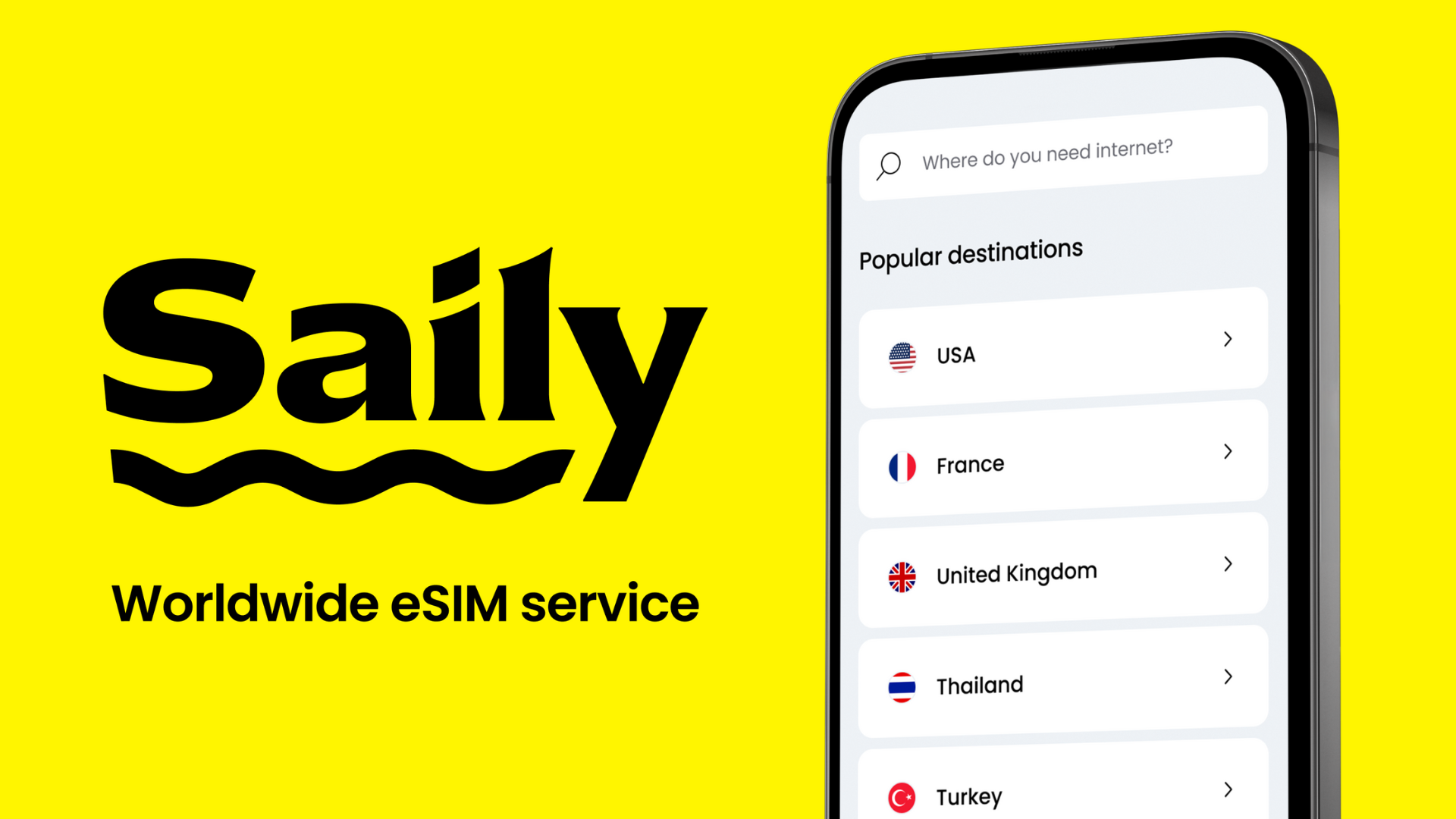
So for example, I downloaded the Saily app and activated a plan that I purchased before I left Australia. I chose the ‘Global’ Plan, they have dozens of different plans depending on how much data you wanted and where you were going. Although this was the ‘Global’ plan I should say it suited me okay for the first part of the trip but certainly was not ‘Global’, covering almost no countries in Sub-Saharan Africa. But for Central America, USA, Jamaica and Europe it was pretty decent.
In past trips I’ve used Vodafone’s roaming – it has a $5AUD per day fee for many countries and pay as you go for others, where I would turn the sim card off and try to rely on WiFi as those fees can be a LOT.
I paid a little over $30USD for the Global Plan, allowing me to use up to 5 GB of data for 365 days. The service I received was okay. For some reason I have found roaming connections not to be as good as local connections and certainly not as reliable as at home. When I take long trips on buses or trains most people seem to be using data the whole journey, whereas I would often have long periods with no connection. This issue I found on Vodafone roaming AND Saily.

But as you could use it in 113 countries, I felt this was pretty decent value. In Africa, a different story. Even their ‘Africa’ plan wasn’t very comprehensive and didn’t include a number of countries I was visiting, so I ended up by a new plan for each individual country. $6.99 for 1 GB in Rwanda for example was typical of the cost, and even in Kigali, the capital, I was experiencing a lot of drop outs. 3 GB for Rwanda was $16.99 so you don’t save a lot of money by getting more data.
I was relying on hotel WiFi for uploads and watching videos and the like back at the accommodation. In Africa I found the speeds actually were very decent and I was able to back things up, at least in Kenya, Zimbabwe and South Africa. I stayed at a cheaper place in Kigali with slower internet that was on the accommodation’s prepaid plan, but the worst was Uganda. I literally could not back up anything on hotel WiFi at the two places I stayed because the speed could not handle it, and in the case where I stayed at Bunyonyi Lake, the net was down for basically a day and it was rubbish anyway.

I had spent the day with the gorillas, most brilliant day of the trip, and I was desperate to back up all my photo and video files. The Saily eSim only had 3 GB on it and the speed and signal were poor, but in my head I thought I had $5 roaming with Vodafone as I had not received the warning that I usually get when I cross into a ‘Pay as You Go’ country. So I thought that as I got something like 120GB a month with Vodafone this would be fine.
I could not have been wrong. Long story short that I don’t wish to relive particularly, I ended up owing more money than you could imagine for a few hours of roaming data. It’s all been sorted since I should say and in the end I only had to pay back a small portion of it, thank goodness. But it was a headache to sort out and really sunk my mood for a few weeks when I was really riding on a high after the gorillas.
It’s my fault although I did not receive any warnings but they were sent to my wife at home in the middle of the night. I would have stopped, obviously, at the first warning. So if you’re reading this and about to use roaming when you travel, well, just double and triple check your plan so you know exactly what they will be charging you.
Do I recommend Saily? I don’t know because I haven’t used any other eSim and have nothing to compare it too. It’s certainly not as cheap as I thought it would be and you have to ration your usage or you need to pay again, and you have to really keep an eye on it. But on the other hand, you won’t fall into the roaming trap I did if you stick to an eSim. Do your research on which one too, because Saily was quite disappointing in East Africa.
Thanks for popping by today – take care wherever you are in the world, and, May the Journey Never End!
 Andy's World Journeys
The world of mobile phones is changing so rapidly that it is difficult to always use their full potential.