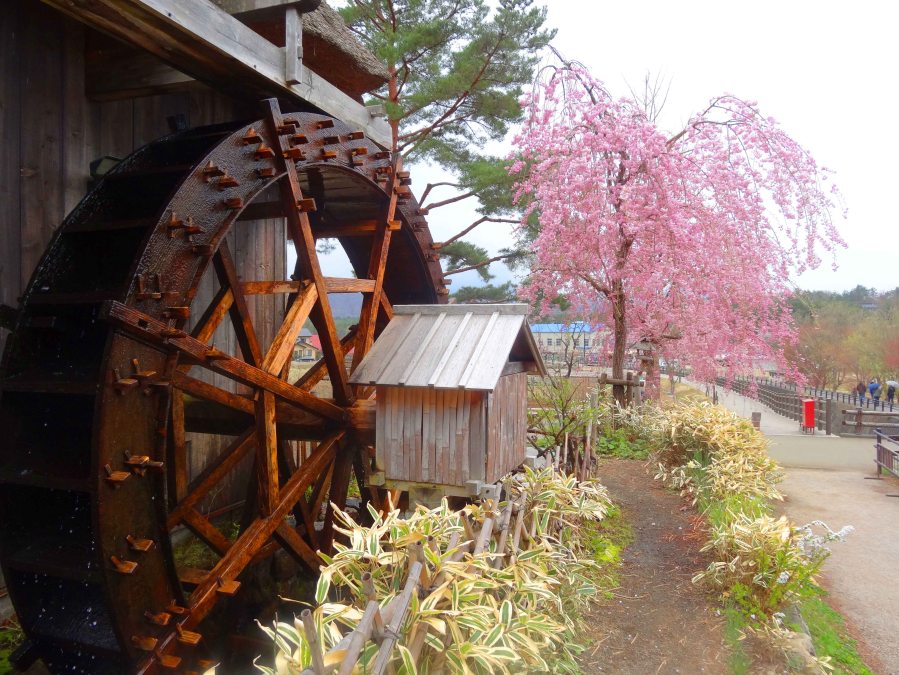
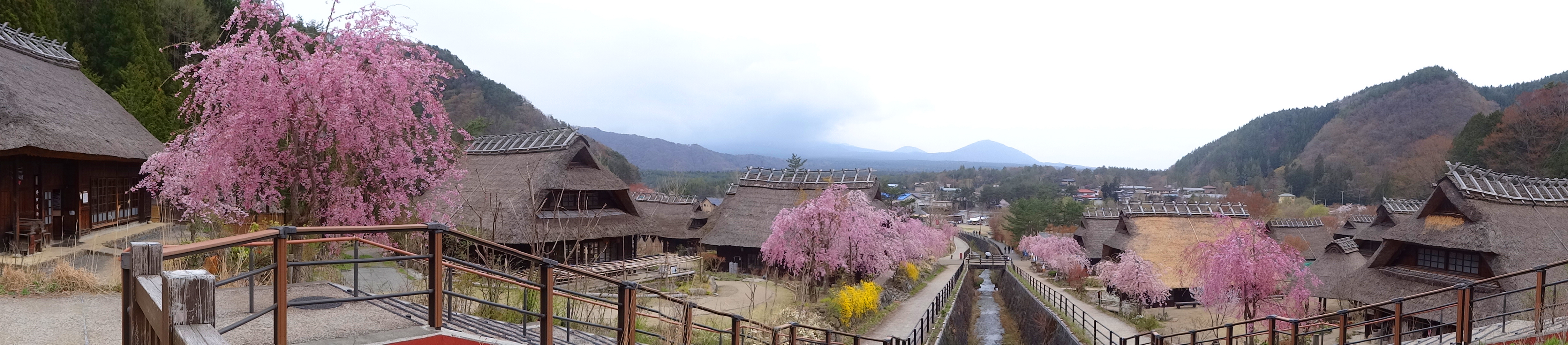
After the excitement of crawling through a tunnel created by lava, we headed around to the Sakik Iyashi no sato NENBA, as the brochure says. In Englished, it calls the place the ‘Thatch Roof Village’. Today it is a basically an open-air museum costing around 1000 yen to enter. You can go from thatched house to thatched house looking inside. Some have a little museum in there, others are selling souvenirs and the like. It’s a stunning setting with plenty of cherry blossoms out for early May, thanks to the altitude I guess.

But it’s also historically significant. In 1966 the region was struck by what must have been a massive typhoon. Mud slid down the mountain with the massive rain waters and basically moved the village further down the hill, albeit not in the same condition and position. It was 2003 that someone had the idea to rebuild the thing, and today it is a tourist attraction with over 20 houses with these amazing triangle-shaped thatched rooves.

They are really really thick! They must be two metres or so from the outside to the inside. Must really work well in keeping the cold, the heat and the elements out. Firstly, we hade lunch. There are a number of little restaurants to eat at, and my mother in law had heard about a noodle (soba) place on the television and we went there. I had a bowl of noodles with duck meat – duck is ‘camo’ in Japanese, and I initially thought it was camel noodles, which I guess didn’t make a lot of sense. This place is also famous for tempura – vegetables fried in batter (can be meat too, just in this case vegetables). It was, honestly, pretty delicious.

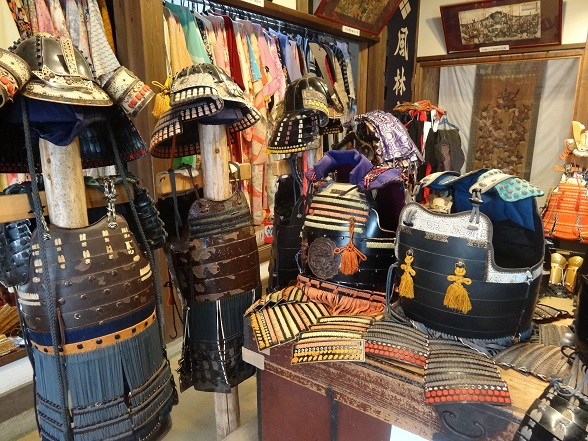
I enjoyed wandering around, up the hill, past a beautiful water mill, there was a museum on the history of the village with photos of how it was after the landslide. There was also a communal hall as well which is used for functions and gatherings (today). There was another museum which held examples of samurai armour, some of them looked pretty old. That was probably the most interesting place. The setting was beautiful. Mount Fuji was supposed just over one hill, although all I could see was clouds.


Next – the ice cave. Well, I saw two caves and paid only about 260 yen so that was a really bargain! (less than three dollars) My last brush with an ‘ice cave’ was in Romania, hidden amongst a forest miles away from people. These were also hidden in a forest, a beautiful, lush, green forest. They are not too far from a little town called Narusawa, one cave is called the Ice Cave, the other the Wind cave. Both were icy, neither were windy.
I took a number of steps down into the ground, into a big rocky hole, the first one, the Wind Cave (I THINK) had low rooves at points, and then opened out with a bit of ice here and there. The Ice Cave required a hard hat and a lot of crawling, basically. Without the hard hat I would have cracked my head on the low rock without a doubt.
There was a lot of ice, and only a few other people inside. And yes, it was cold, less than zero. Funny how ice caves are never thirty degrees and toasty! It had been a real adventure. But that adventure was pretty much at an end. Back into the car and back to Yokohama. All together the ice caves, open air museum, the lava holes and the Sengen temple, and you could even include the video at the visitor’s centre, made for a great day out. Of course, you need transport which could be really expensive, it really helps to know someone with a car in Japan.


Sadly, though, I didn’t get a great shot of Fuji on the camera. If I did, it might have looked something like this…

Tune in tomorrow with a few thoughts on being back home in Australia, and a quick trailer for Friday’s Podcast! May the journey never end!
 Andy's World Journeys
This place looks absolutely stunning. How long did you manage to stay there?!!
this was just a day trip from Yokohama. thanks for reading as always!