
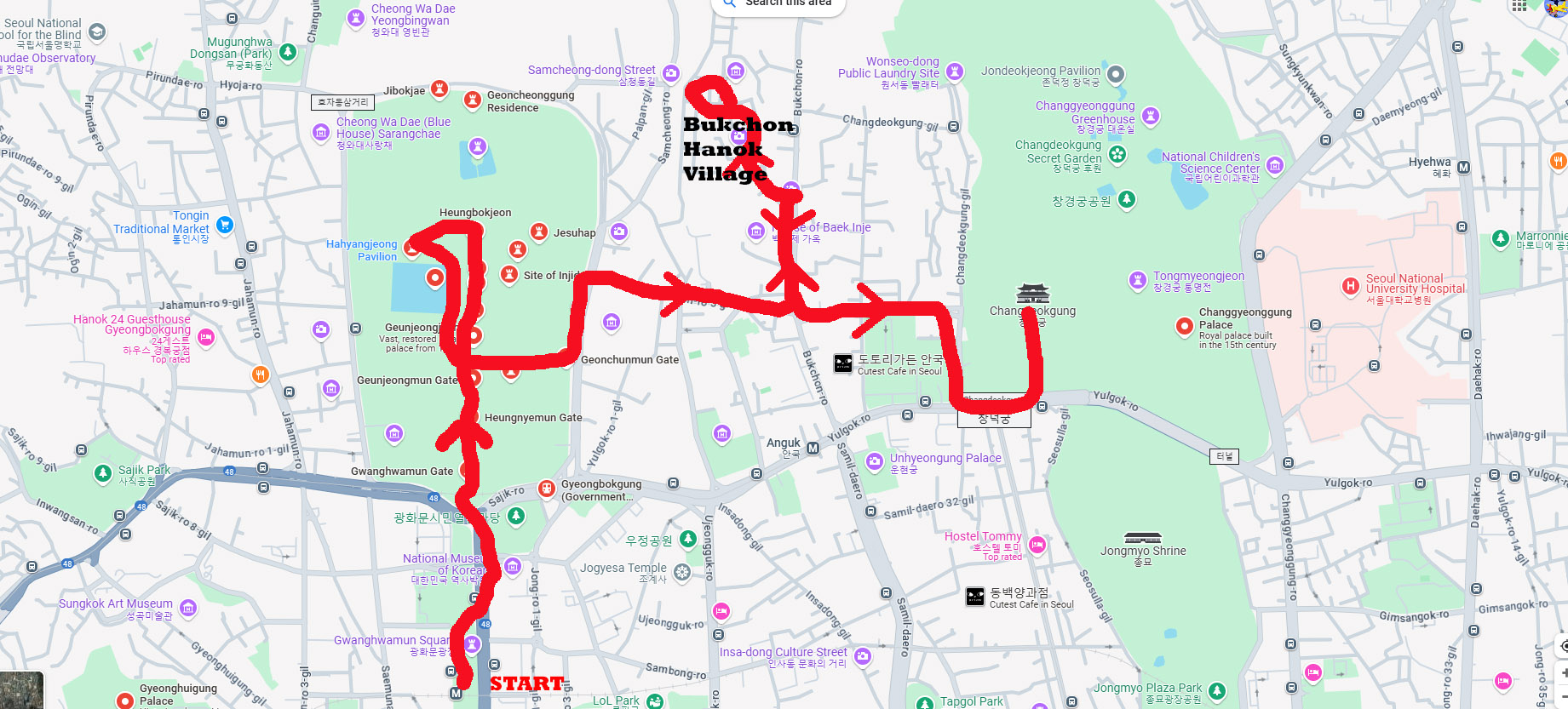
G’day folks. Hopefully today finds you well. It’s time to start delving into Seoul and it’s attractions, of which there are many. Today I am starting with two palaces and the historic district of Bukchon where there is a small village of traditional Korean houses. These work well as a way to spend a day or half a day more likely in Seoul because they are walkable from each other, with Bukchon being about half way between the two palaces. You’ll certainly get some steps up too, but that’s not a bad thing, right?
Gyeongbokgung Palace
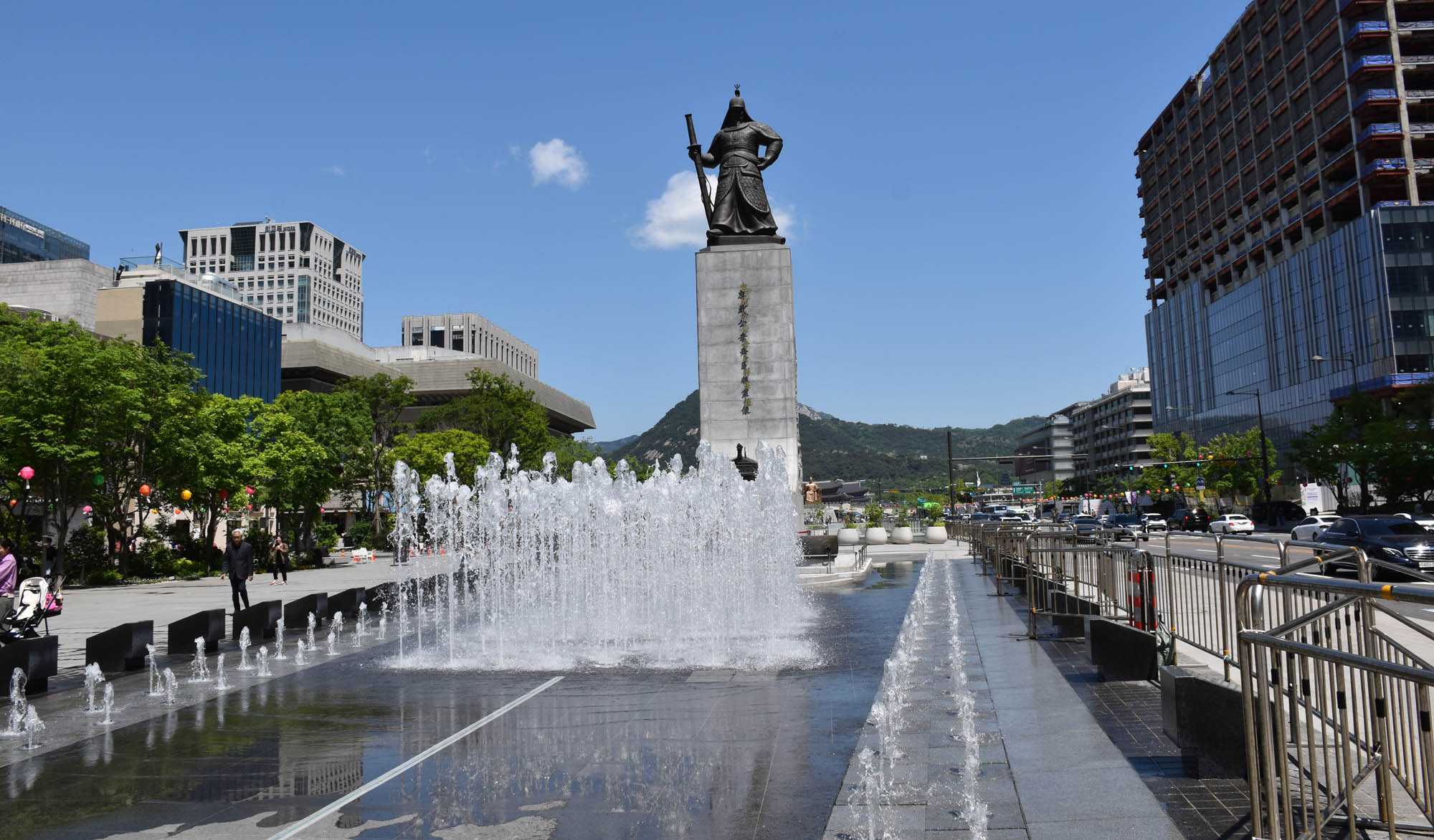
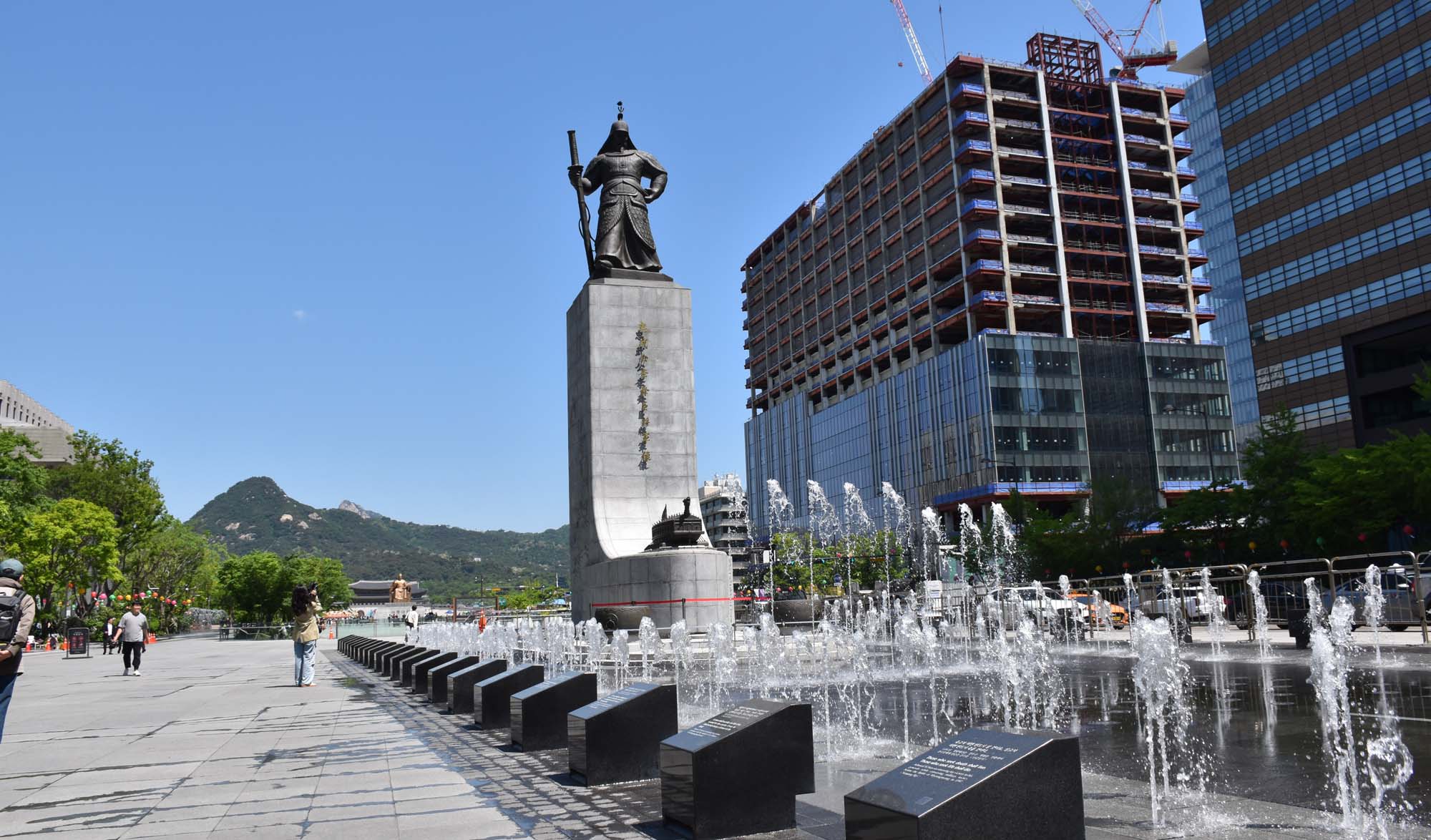
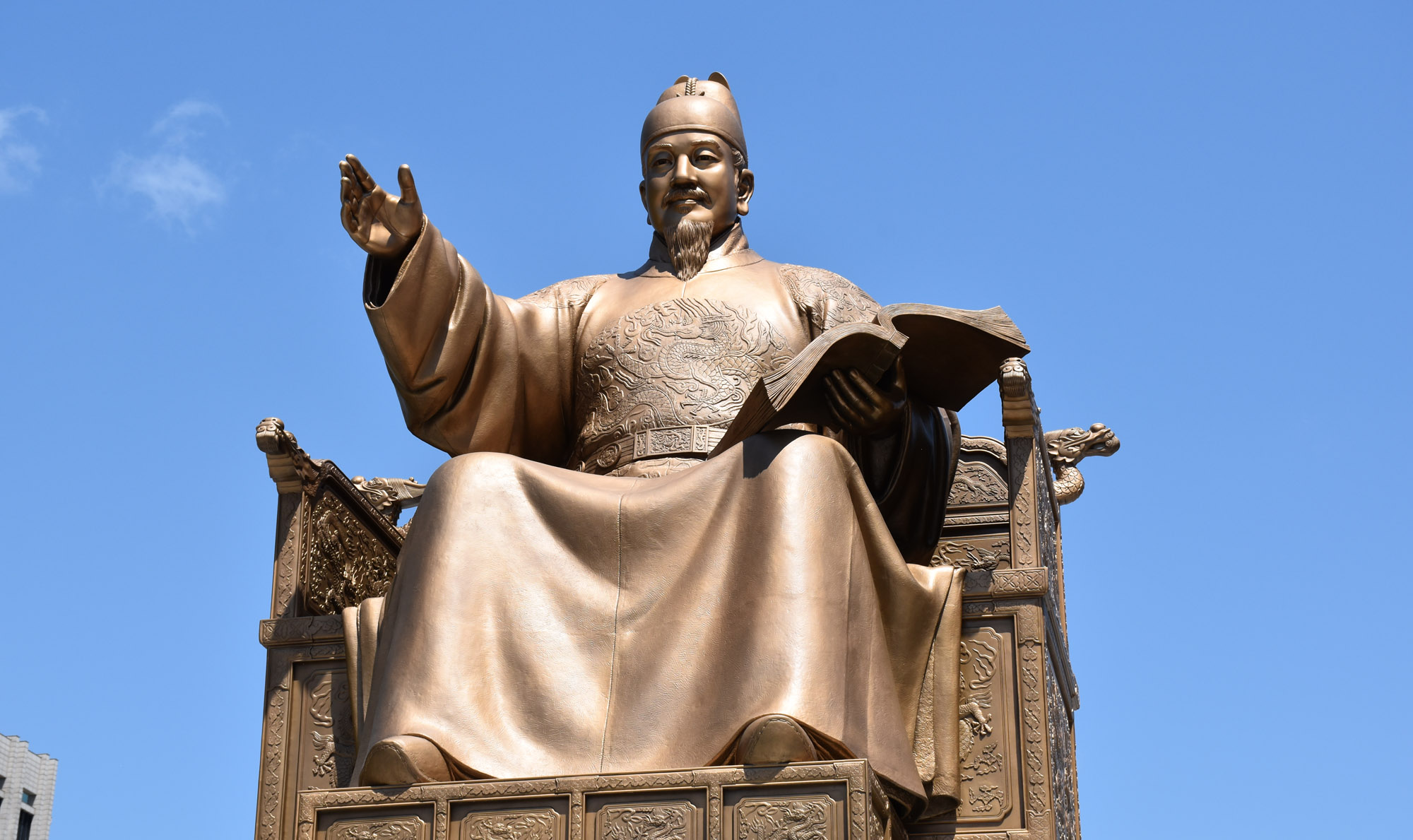
You can take the efficient and pretty comprehensive metro system to Gwanghwamun Square, which is just in front of Gyeongbokgung Palace and has an interesting fountain and statue of Sejong the Great which people take their selfies in front of. Underneath the statue is a sort of concourse with a mini-museum there to check out for free if the mood takes you.
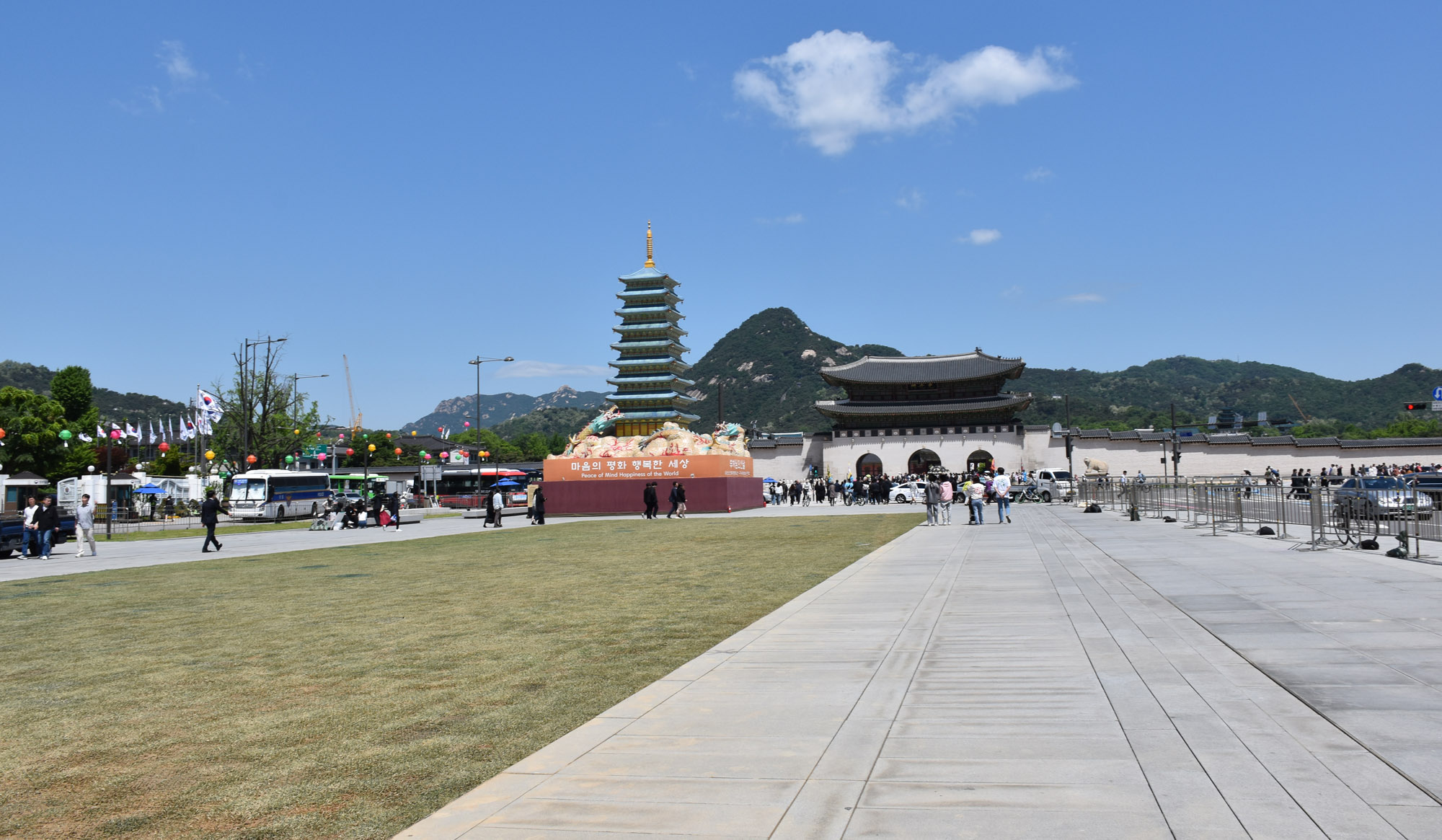
Gyeongbokgung Palace has impressive gates that you enter through and a cheap entrance price (May 2024 at least) of 3000 Won, a little over 2 US bucks! Want to save even more money? You can enter for free if you dress up in period costumes which a LOT of people do. Of course, if you don’t have one lying around somewhere you will need to hire it – there are plenty of places, and then you can join in the costumed selfie obsession which seems to be super popular at this particular palace. I think this offer of free entry is also valid at other palaces in Seoul.
Gyeongbokgung Palace dates back to 1395 which was three years into the Joseon dynasty. Of course you are not looking at the original buildings for the most part (or any part probably) as fire and war over the centuries saw the place destroyed and rebuilt. Most recently it was destroyed by Japan in the early 20th century but has been systematically restored since the 1990s and is now frankly, quite magnificent.
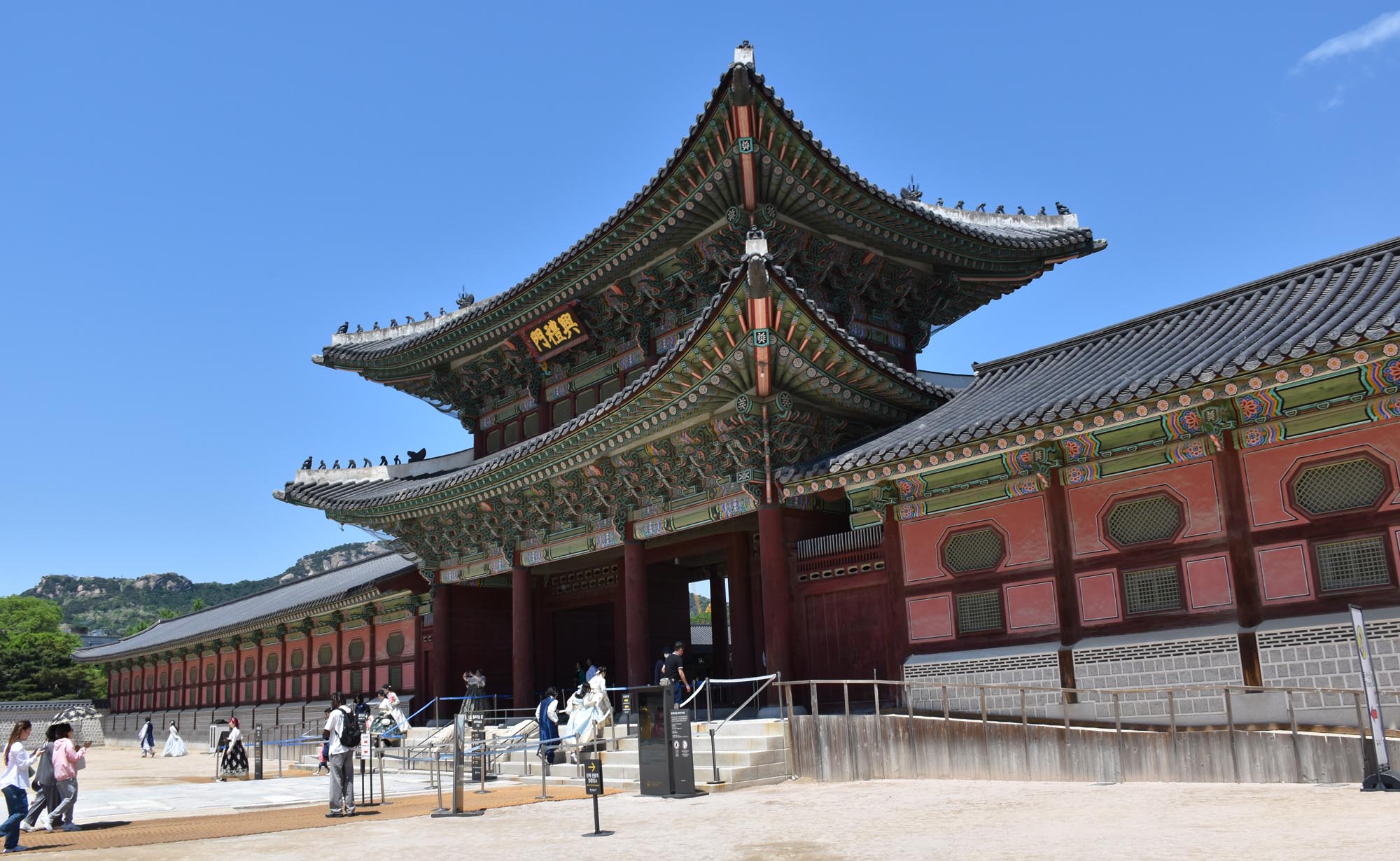


The colours and uses of blues and greens are truly striking and sets Korean style palaces aside from their neighbours in the region I think. This is the biggest palace of the Joseon Dynasty 1392 – 1897 and was the main palace until war at the end of the 16th century. It’s on massive grounds and it felt a little like Beijing’s Imperial Palace as you go through one gate onto yet another magnificent courtyard with a beautiful building centrepiece after another.
Then you loop around the side to find even more including this lake in front of the Gyeonghoeru Pavilion which is probably the most beautiful part of the entire complex. As I often but not always do, I decided not to go with an audio guide which would have filled my head with dozens of facts and stories about the palace, none of which I would have remembered.
Bukchon Hanok Village
A ten to fifteen minute walk will take you to the Bukchon Hanok Village, a residential district in Seoul which has become a major tourist site seeing millions of visitors every year. A ‘Hanok’ is a traditional style of Korean house with some amazing rooves. This group of houses dates back to early 20th century, so not super old but nonetheless a really interesting and photographic district to visit.
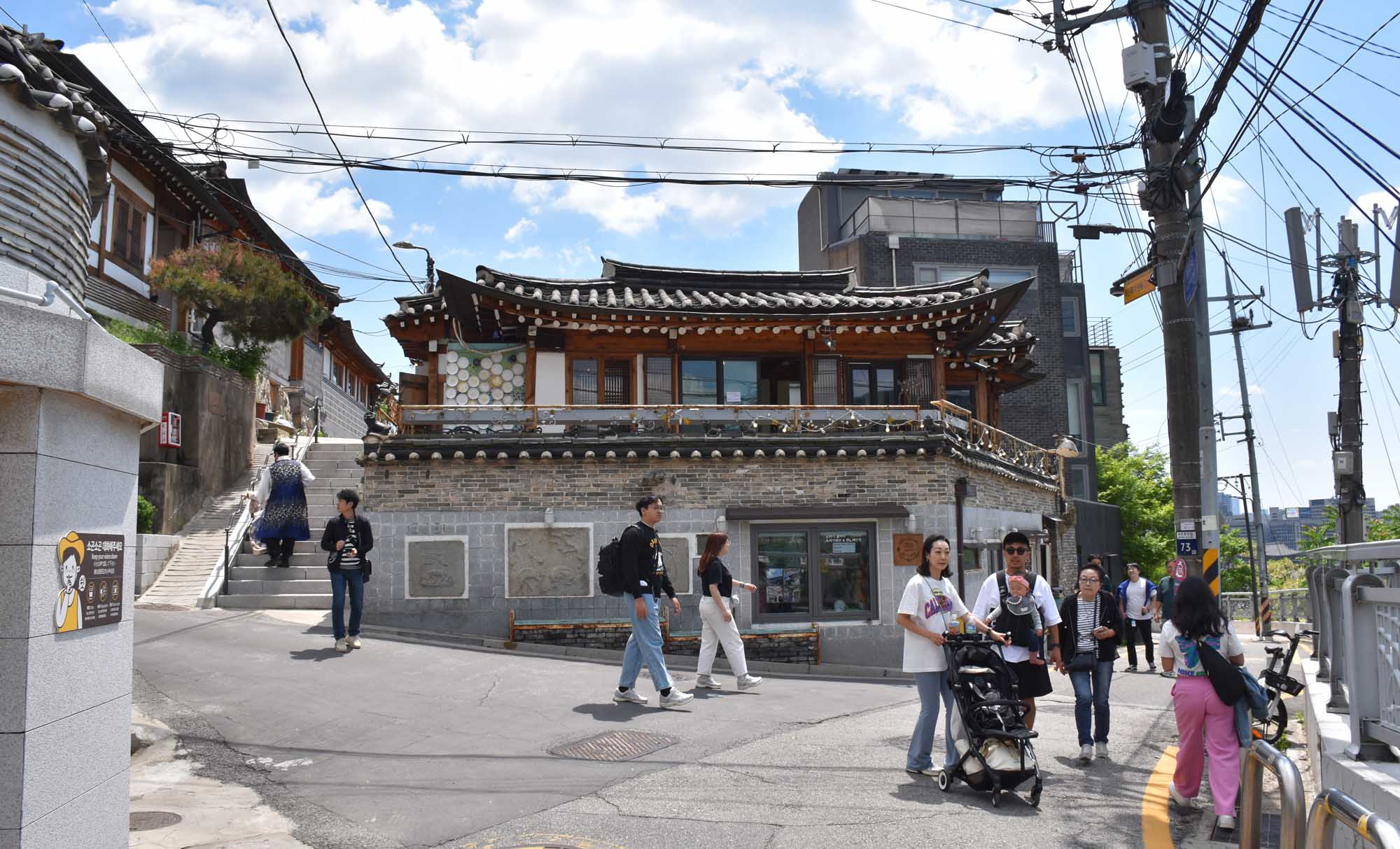
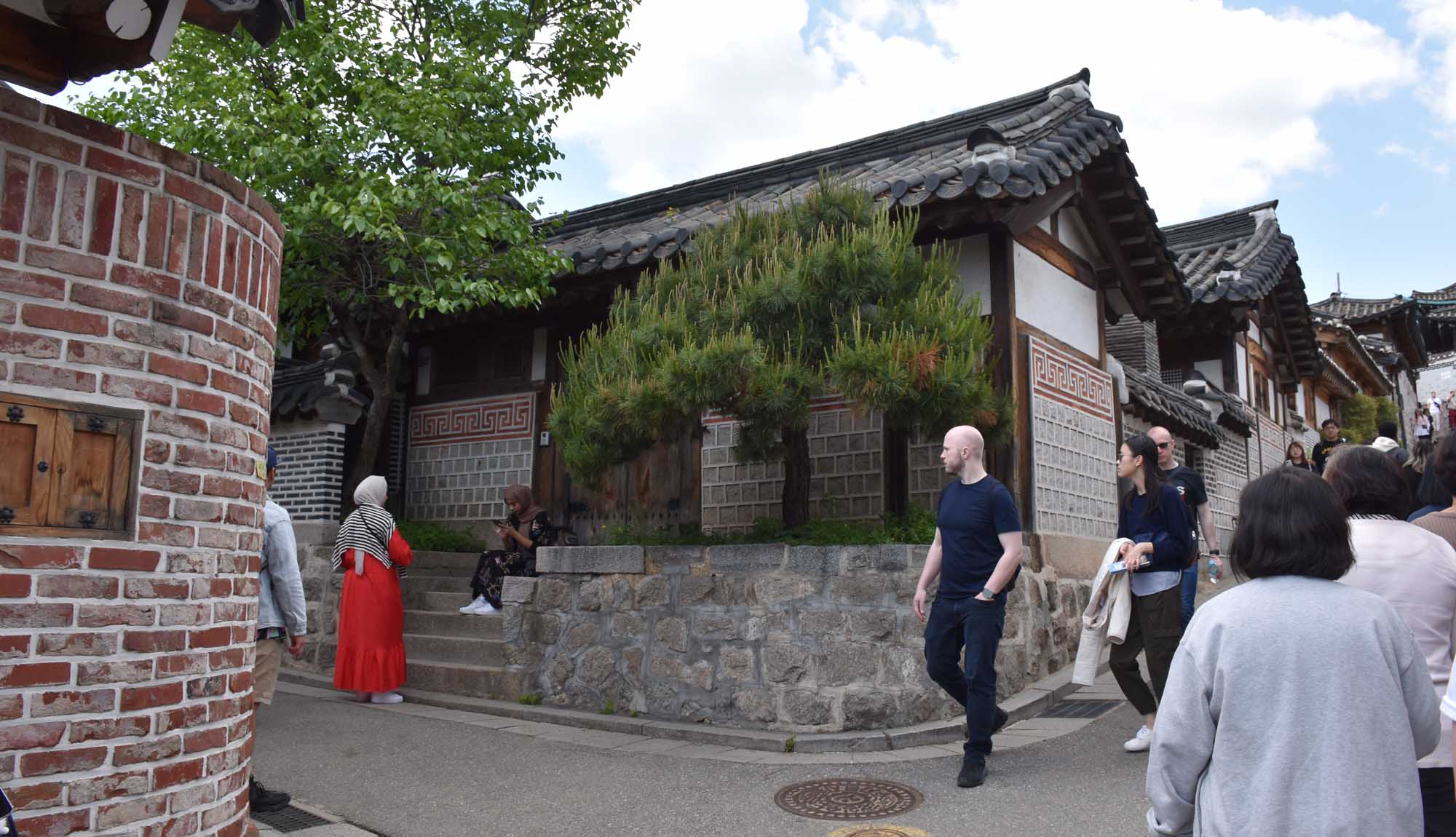


Unfortunately you will not be the only one. Hundreds or more were walking the hilly streets when I was there. It really is mostly for the photos, but you need to keep in mind it IS a RESIDENTIAL district and people live here, there are a few signs here and there asking people to be quiet and respect the people who live here, and frankly if this was my neighbourhood I wouldn’t be happy with thousands of tourists a day walking up and down past my house.
There is a little museum I tried to visit too in amongst the houses and on the far side some great views across Northern Soul. Sadly, the museum was closed when I visited.
Changdeokgung Palace
So another 15 to 20 minutes walk and you arrive at the entrance of Changdeokgung Palace. From the Bukchon Hanok Village you have to come down and around a bit as there is only one entrance. This palace was built between 1405 – 1412, so not that long after the Gyeongbokgung Palace. It seems the rulers of this period liked to keep their options open because there are at least another three palaces that were built during this era.
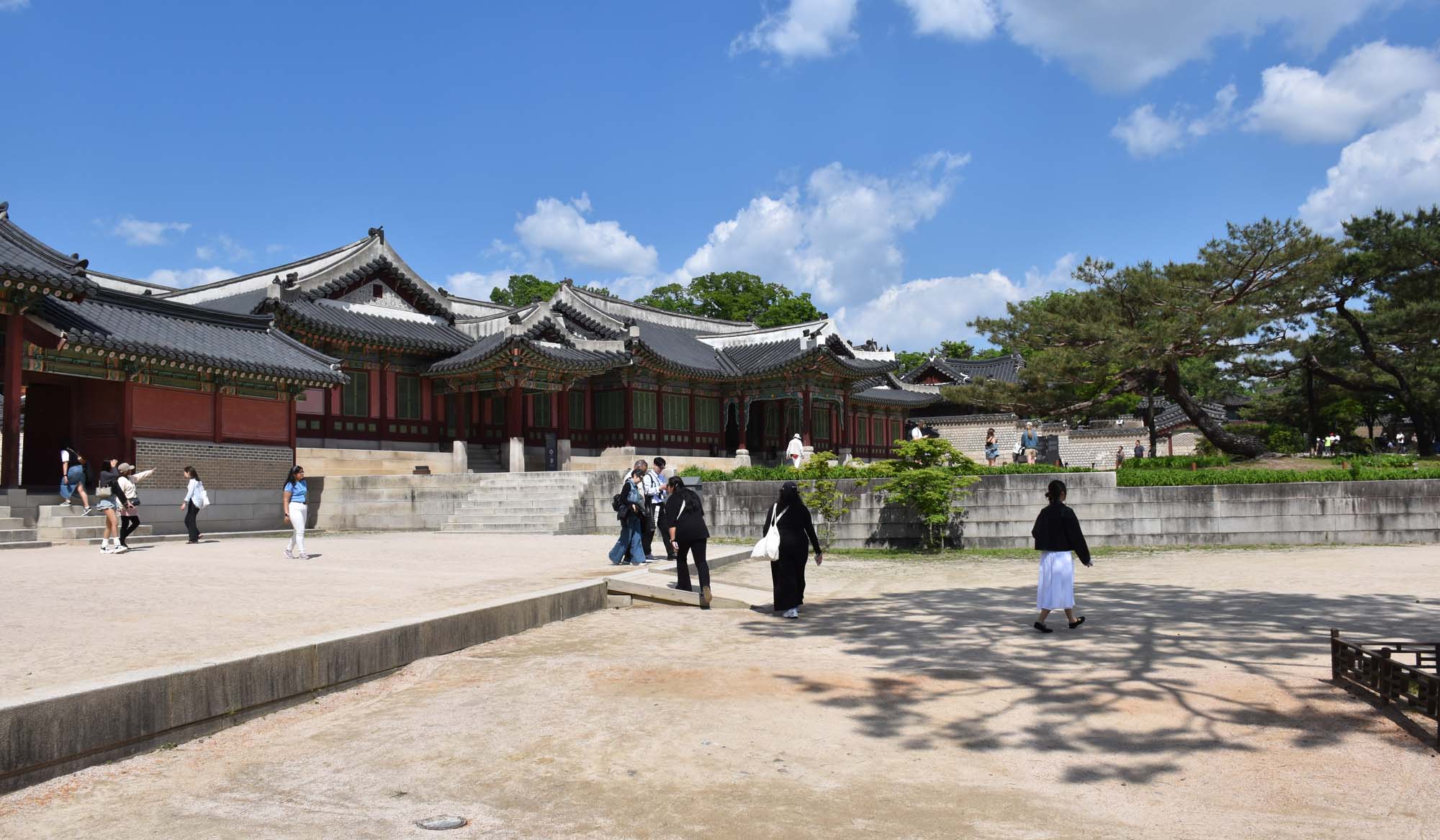

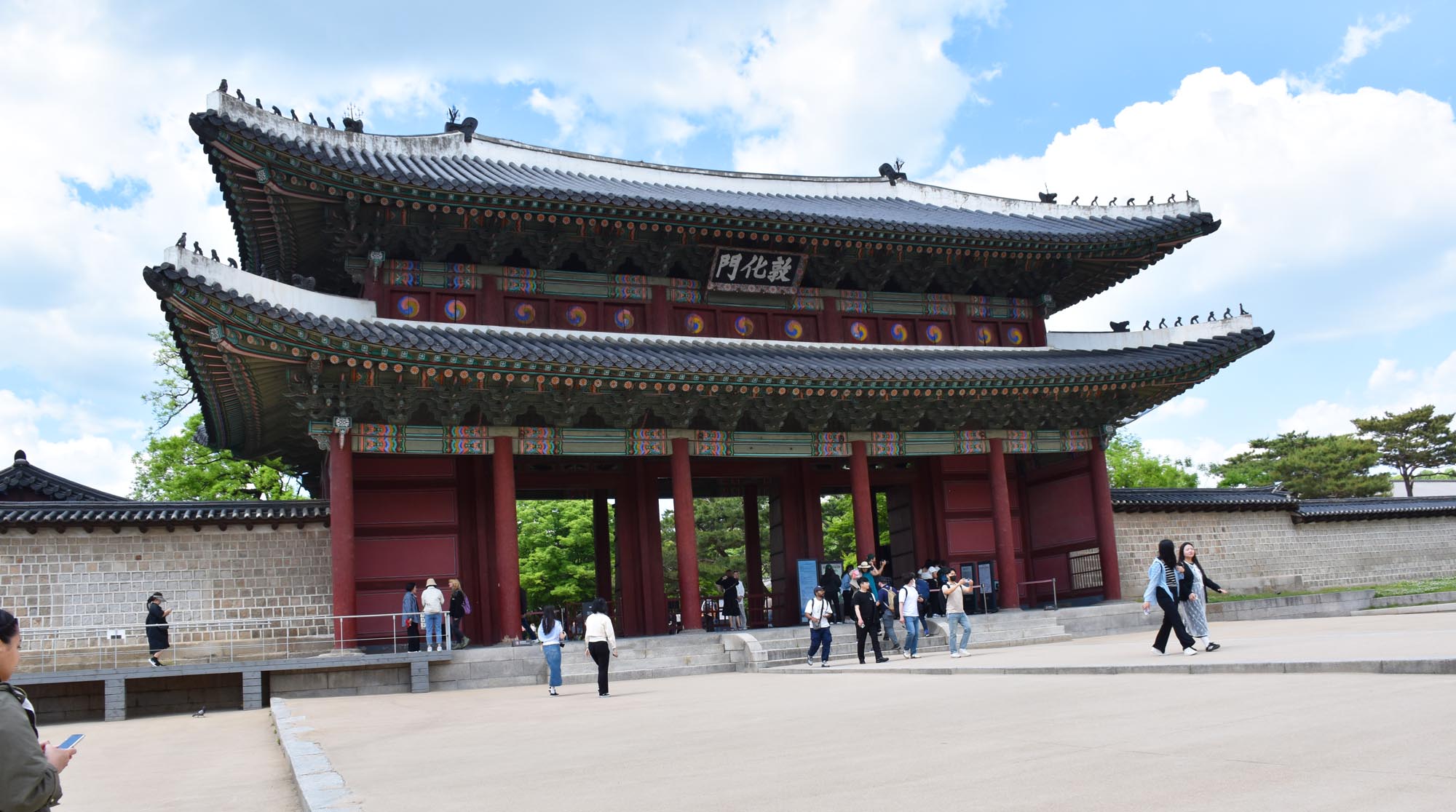
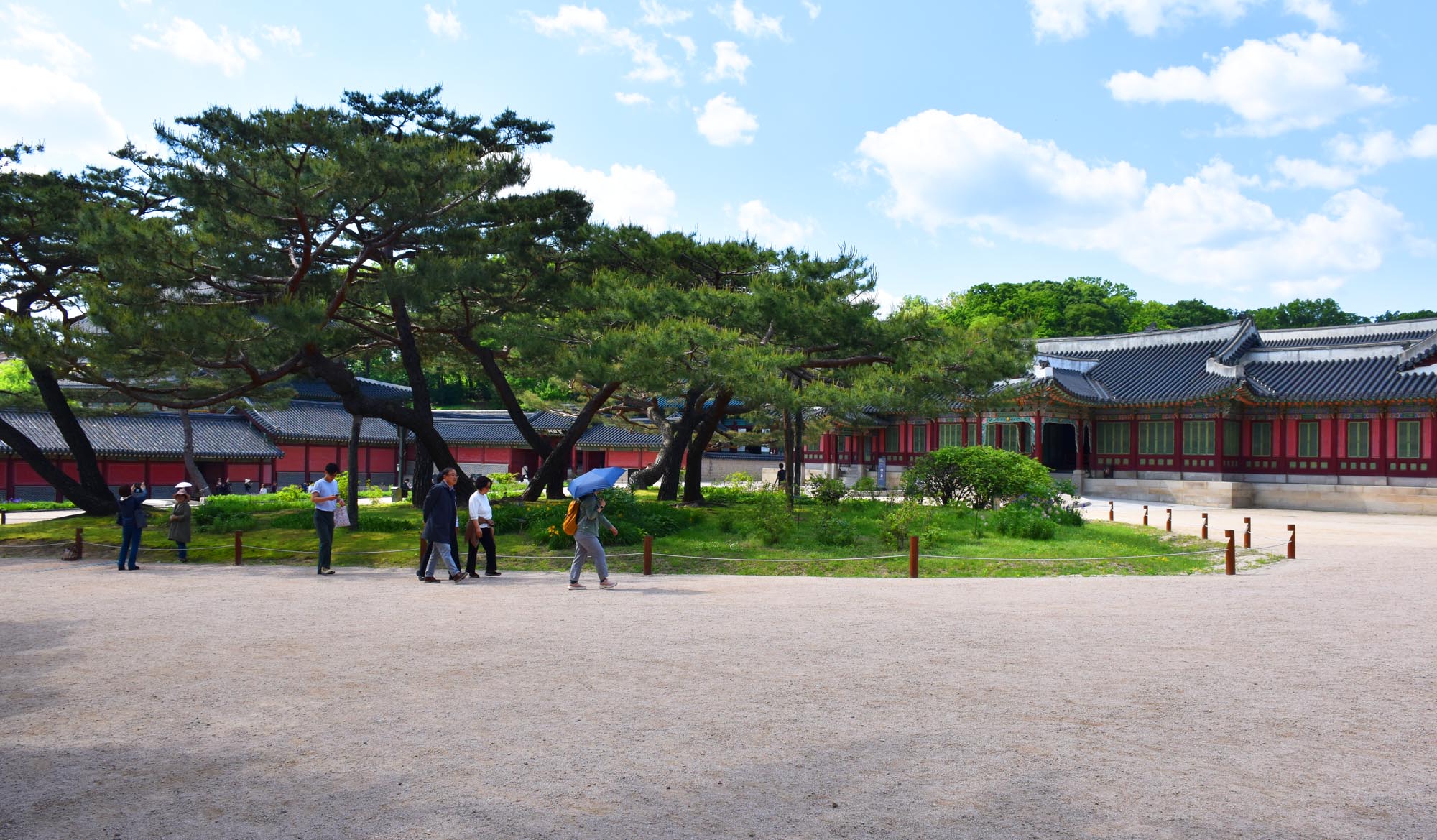
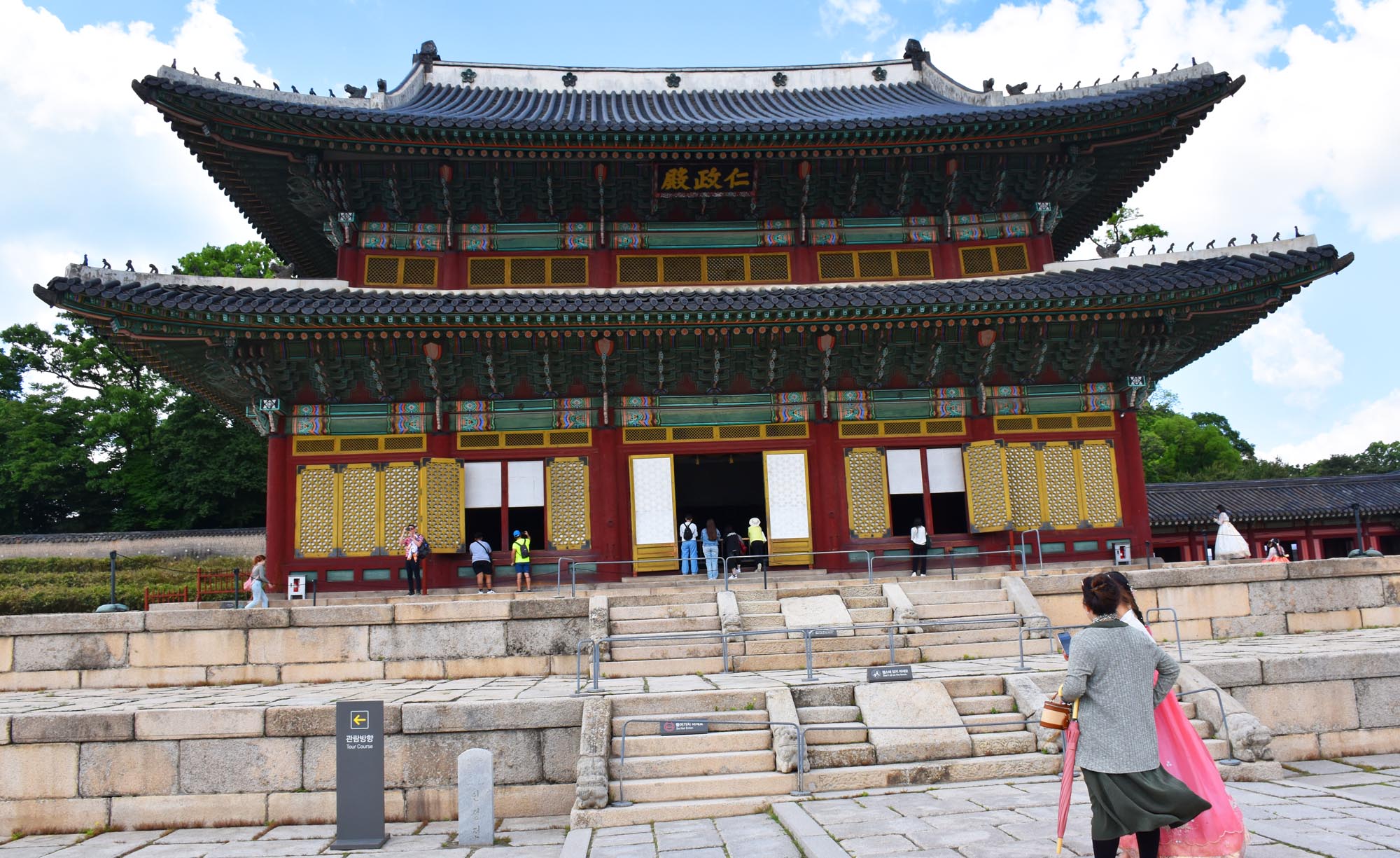
This palace was not as teeming with visitors as Gyeongbokgung Palace which was a bit of a mercy, the layout is different, and there are some gardens attached as well which I didn’t visit. It’s big but certainly the smaller of the two palaces, again entrance was 3000 Won. They are both fun to explore though and this was worthwhile visiting too. It also has its history of being destroyed and rebuilt over the centuries. At different times it was used as the main palace of the Joseon Dynasty.
There are other similar but perhaps not quite as big palaces elsewhere in Seoul that I didn’t get to visit. I had six solid days of sight seeing which were all equally packed and I thought two palaces was enough! I thoroughly recommend both of them and doing them in with a decent walk via Bukchon I thought was a pretty decent way to go about it!
Thanks for popping in today! Take care wherever you are, more Seoul on the way, May the Journey Never End!
 Andy's World Journeys
I missed checking out the Bukchon Hanok Village in all my visits to Seoul. I would like to see it next time.
Korea’s traditional architecture is as attractive as their contemporary creations, and I appreciate that they continue to take care of their heritage.
I can see why Bukchon Hanok Village is so popular with tourists, but completely understand how annoying it would be for the locals who live there. I’d still like to see it myself. 😊 Maggie
I adored visiting those places and plan to return at some point.
Verg beautiful architecture